
Starting a running routine can feel like a daunting task, especially if you’re someone who’s spent most of their time on the couch or away from physical activity. But the truth is, anyone can transition from a sedentary lifestyle to running a 5K with the right approach, mindset, and preparation. It’s not about being fast or a natural athlete—it’s about consistency, gradual progression, and setting yourself up for success.
In this blog, we’ll guide you through the steps to go from couch potato to 5K runner. We’ll cover the essentials: how to start, what gear you need, tips for building stamina, and how to approach the race with confidence. With a solid plan in place, you’ll not only cross the 5K finish line but also develop a lasting love for running. Let’s get started!
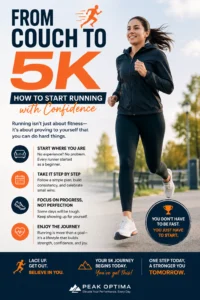
Before we dive into the specifics, let’s talk about why the 5K is the perfect race for beginners. A 5K, which is 3.1 miles, is an achievable distance for most people, even those who have never run before. It’s long enough to feel like a real challenge but short enough that it won’t require months of training to complete. In fact, many people start running with a goal of finishing a 5K within a few months of starting, and with the right training, that’s absolutely possible.
The 5K distance is also perfect for building confidence. It’s not about speed or performance; it’s about crossing the finish line and accomplishing something you might have thought was impossible. Plus, training for a 5K gives you a structured, motivating goal to work toward, making the process more rewarding.
It’s important to start with realistic expectations when beginning any new fitness journey. Running a 5K for the first time is a process, and it’s important to approach it with patience. Here are some things to keep in mind:
Remember, running a 5K isn’t about impressing others—it’s about accomplishing something personal and proving to yourself that you can do it.
To start running with confidence, it’s important to have the right gear. You don’t need a lot of fancy equipment to begin, but there are a few essentials that will make your running experience more comfortable and effective.
The most important investment for a new runner is a good pair of running shoes. While any athletic shoe can work for walking or light activity, running shoes are designed to provide the support and cushioning your feet need during higher-impact activity. A proper fit is crucial to avoid discomfort or injury. When choosing shoes, make sure they offer:
Take the time to visit a running store where an expert can assess your foot type and running style to recommend the best shoe for you.
Wearing comfortable, moisture-wicking clothing is important to avoid chafing or discomfort while running. Choose fabrics that allow your body to breathe, such as synthetic materials like polyester or nylon. Look for:
Although you don’t need a fancy watch, tracking your progress can be incredibly motivating. A fitness tracker, running watch, or a mobile app can help you monitor your pace, distance, and time. Many apps, such as Strava or Runkeeper, also allow you to connect with friends or share your progress, making it a fun way to stay accountable.
Now that you’re geared up, it’s time to start training. The key to building confidence and stamina for a 5K is following a gradual, structured plan. You don’t need to start by running 3 miles right away! Here’s a simple, beginner-friendly approach:
The Couch to 5K (C25K) program is one of the most popular training plans for beginners. This 9- week program starts with a combination of walking and running and gradually increases the running intervals as your fitness improves. It’s designed to be gentle on your body while still challenging you to make progress.
Here’s a breakdown of how it works:
You can find free versions of this plan as an app, or you can download a printable version. Following the program ensures gradual, achievable progress.
It’s tempting to push yourself hard when you’re excited to start training, but rest is just as important as the workouts themselves. Make sure to schedule rest days to allow your muscles and body time to recover. Running can be tough on your joints and muscles, so proper recovery will help you avoid burnout or injury.
You don’t need to rest completely on these days. Low-impact activities like walking, yoga, or swimming can keep you active while giving your muscles time to recover.
Running, especially for beginners, is as much a mental challenge as a physical one. There will be times during your training when you feel like quitting, or when your mind tells you that you can’t run another step. That’s when your mental toughness will come into play.
Here are some ways to build mental strength as you prepare for your 5K:
Rather than thinking about the entire 5K, break the race down into smaller goals. Focus on running for just one more minute or reaching the next streetlight. Focusing on one goal at a time will make the challenge feel less overwhelming.
Your mindset matters more than you think. If you find yourself thinking “I can’t do this,” replace that with something more positive, like “I’m getting stronger every day” or “I’ve made it this far—just a little further.” Encouraging yourself along the way will help you push through the tough moments.
Take a moment to visualize yourself crossing the finish line of your 5K. Imagine the sense of accomplishment and pride you’ll feel when you complete your goal. This mental image can provide powerful motivation when the going gets tough.
When the day of your 5K arrives, don’t let nerves get the best of you. Here’s how to tackle the race with confidence:
Lay out your clothes, running shoes, and any gear you need the night before. This will help you feel organized and reduce pre-race anxiety.
It’s easy to get caught up in the excitement of race day and start too fast. Remember, you’ve been training at a comfortable pace—there’s no need to rush. Start at a slower pace, and gradually pick it up as you feel more comfortable.
Take a moment to appreciate the accomplishment of being there. Look around at your fellow runners, soak in the atmosphere, and remember how far you’ve come. Running is about enjoying the process, not just the finish line.
Crossing the 5K finish line is a huge accomplishment! Whether you run the entire race or walk part of it, finishing a 5K is something to be proud of. Celebrate your success and reflect on your journey. Not only have you achieved your goal, but you’ve also learned valuable lessons about persistence, discipline, and self-belief.
Conclusion: From Couch to 5K with Confidence
The journey from couch to 5K is one of perseverance, consistency, and mental strength. With a clear training plan, the right gear, and the commitment to show up each day, anyone can complete a 5K—no matter their starting point. By focusing on small, achievable steps, you’ll gradually build your confidence, stamina, and love for running. So lace up your shoes, get started, and soon enough, you’ll be crossing that 5K finish line with pride and confidence. You’ve got this!
